


MATERIAL INNOVATIONS FOR
FASHION & SPORTS AT FUTURE FABRICS EXPO BRUSSELS 2026
June 29, 2026
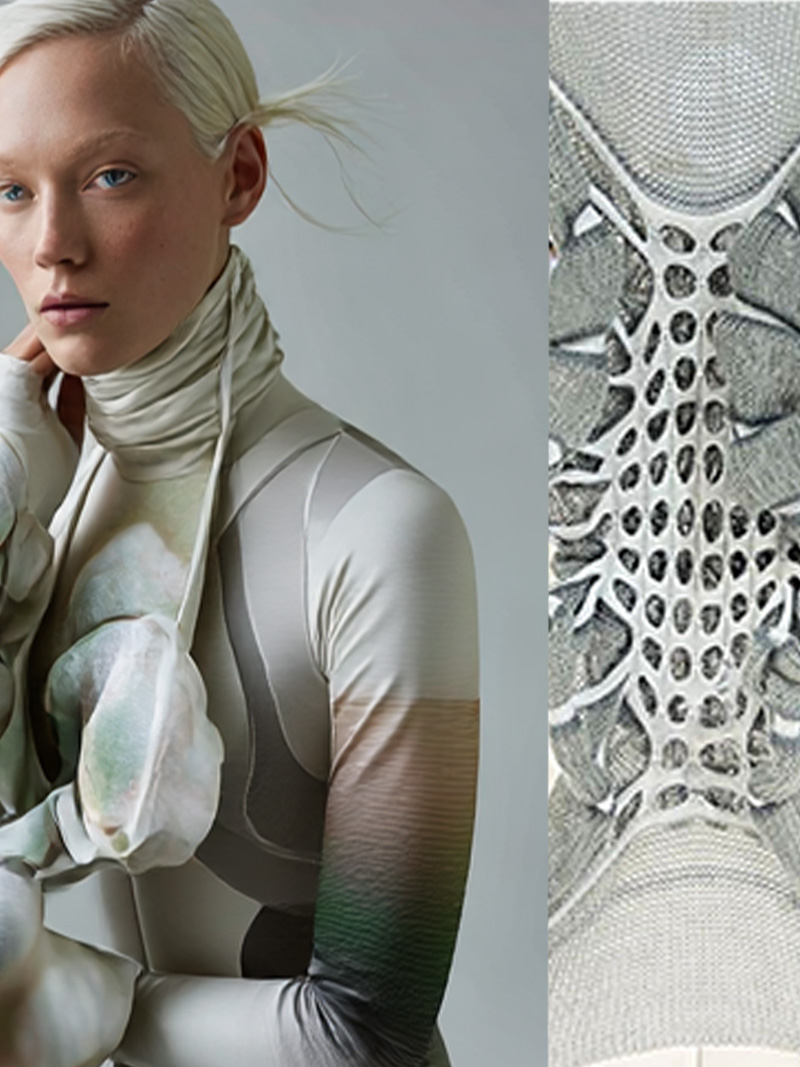
Image: AI by Moject | Calypso Studio
1.What were the key material trends at Future Fabrics Expo Brussels 2026?
The exhibition highlighted the growing importance of bio-based materials, innovative applications for natural fibres such as nettle, and new approaches to transforming textile waste into entirely new material categories.
The future of textiles is no longer defined by fibres alone. At Future Fabrics Expo Brussels 2026 it became clear that biology, material innovation and circular thinking are reshaping how textiles and products are developed.
Today’s materials are no longer simply engineered. They are cultivated, transformed or developed in collaboration with biological processes. Rather than forcing raw materials into predefined properties, designers and material innovators are increasingly working with the characteristics that nature already provides.
Perhaps this is the real shift shaping the future of textiles.
Future Fabrics Expo has evolved far beyond a traditional textile exhibition. Alongside woven and knitted fabrics, visitors encounter footwear concepts, material prototypes, interior applications and experimental research projects. Many of these innovations no longer belong to a single industry. They could just as easily become part of running shoes, bicycle helmets or technical equipment as fashion collections or furniture.
Not everything presented in Brussels was entirely new. Mycelium, bio-based materials and alternative leathers have appeared at industry events for several years and are also familiar from trade fairs such as Performance Days. What struck me, however, was how naturally biological processes have become part of material innovation.
Your content goes here. Edit or remove this text inline or in the module Content settings. You can also style every aspect of this content in the module Design settings and even apply custom CSS to this text in the module Advanced settings.
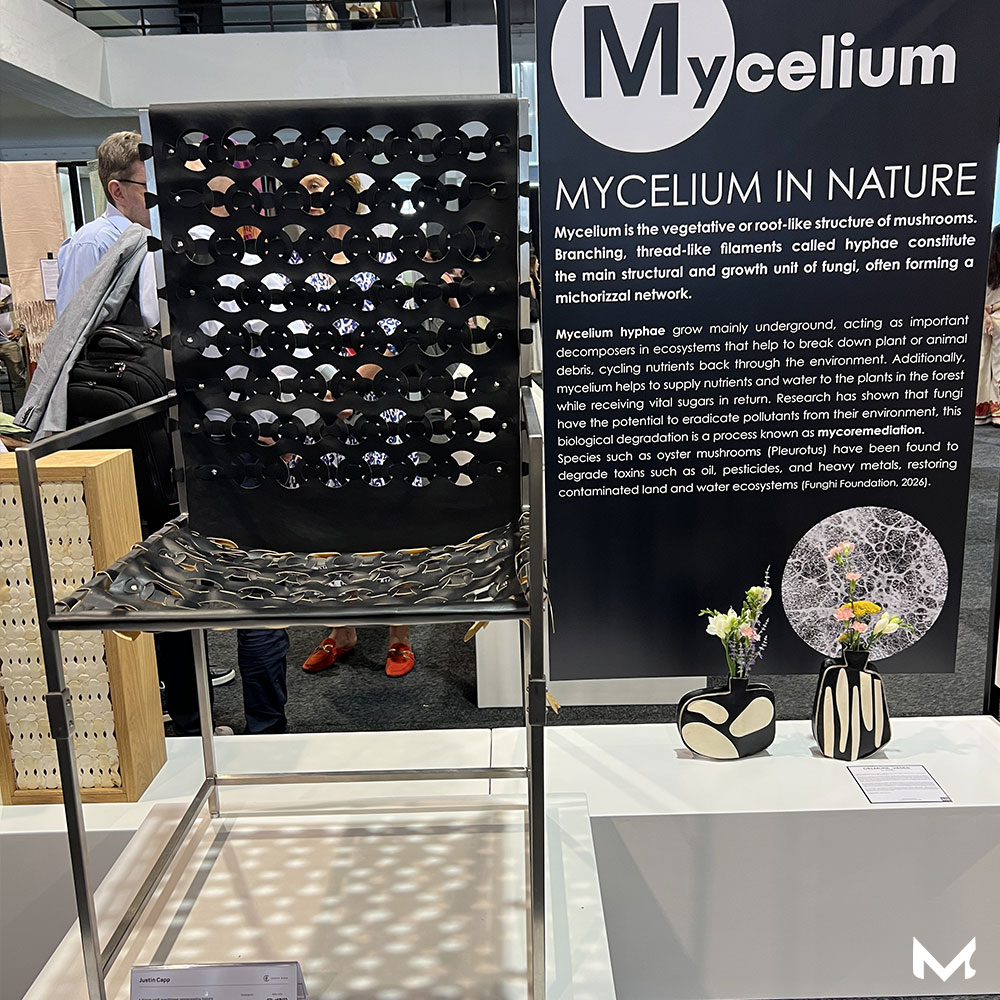
Image: Future Fabrics Expo 2026 by Moject
3.What role does biology play in future textile development?
During my design studies, I remember a fellow student experimenting with wool and salt crystals to create organically grown textile surfaces. At the time, projects like these felt more like artistic explorations than realistic material concepts.
Walking through Future Fabrics Expo, I found myself thinking back to those early experiments.
Biology is becoming an active part of material innovation. Mycelium, algae and bio-based polymers are enabling designers to create materials that interact with their environment rather than simply replacing conventional materials.
Mycelium was being used for wall panels, footwear components and surface materials.
One project that particularly caught my attention was 1365% by Calypso Studio. The research explores a bio-based shape-memory fibre made from pullulan, a natural polysaccharide produced by a yeast-like fungus. Activated by water, the fibre can stretch dramatically before returning to its original form.
Although still a research project, it demonstrates how future materials could become adaptive rather than static.
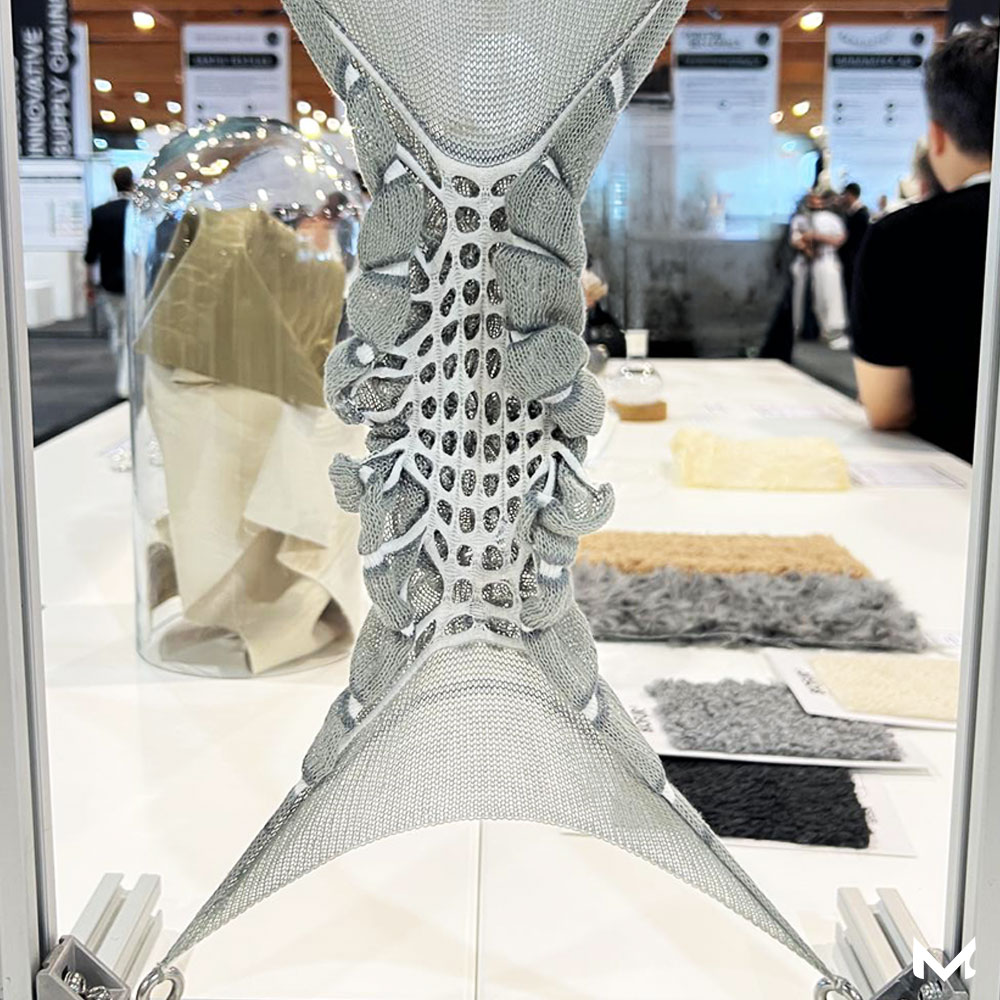
Creation by Calypso Studio, photo by Moject
Equally fascinating was the Living Shoe developed by designer Jessica Thies of Synthesis. Constructed from hemp fabric and printed with an ink containing living microalgae, the shoe is capable of photosynthesising while the algae remain alive. The printed pattern simultaneously creates a smocked three-dimensional structure, allowing biological function and surface design to become part of the same process.
Whether concepts like these will ever become commercial products is almost beside the point. What matters is the changing role of materials themselves. Rather than acting as passive components, they are beginning to interact with their environment.
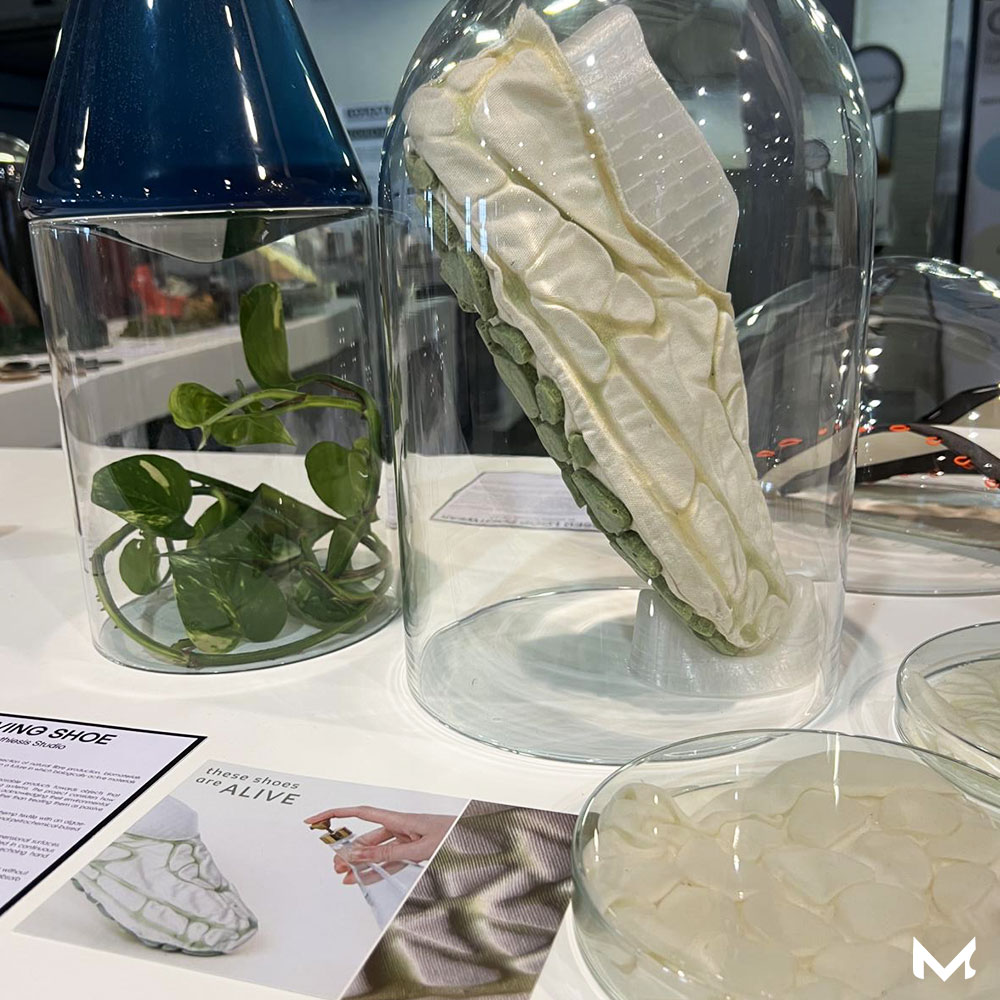
Creation by Synthesis, photo by Moject
3.Nettle Fibre — A Future FABRIC with Surprising Versatility
One of my personal highlights was the collection presented by Nettle Circle.
Nettle fibre itself is not new. What surprised me was the remarkable diversity of applications. The collection ranged from lightweight linen-like woven fabrics and fine knits to durable materials developed for footwear.
The biggest surprise, however, was an incredibly soft teddy fleece.
For softer constructions, Nettle Circle combines nettle fibres with Lyocell, resulting in fabrics that feel remarkably soft while maintaining the distinctive character of the natural fibre.
What fascinates me most is not the sustainability story, but the design potential. Nettle is evolving into a versatile material platform capable of delivering entirely different tactile and functional properties depending on its construction. From structured footwear materials to soft apparel and home textiles, the possibilities are expanding rapidly.
Sometimes innovation does not require inventing an entirely new material. Sometimes it simply means looking at an existing one differently.
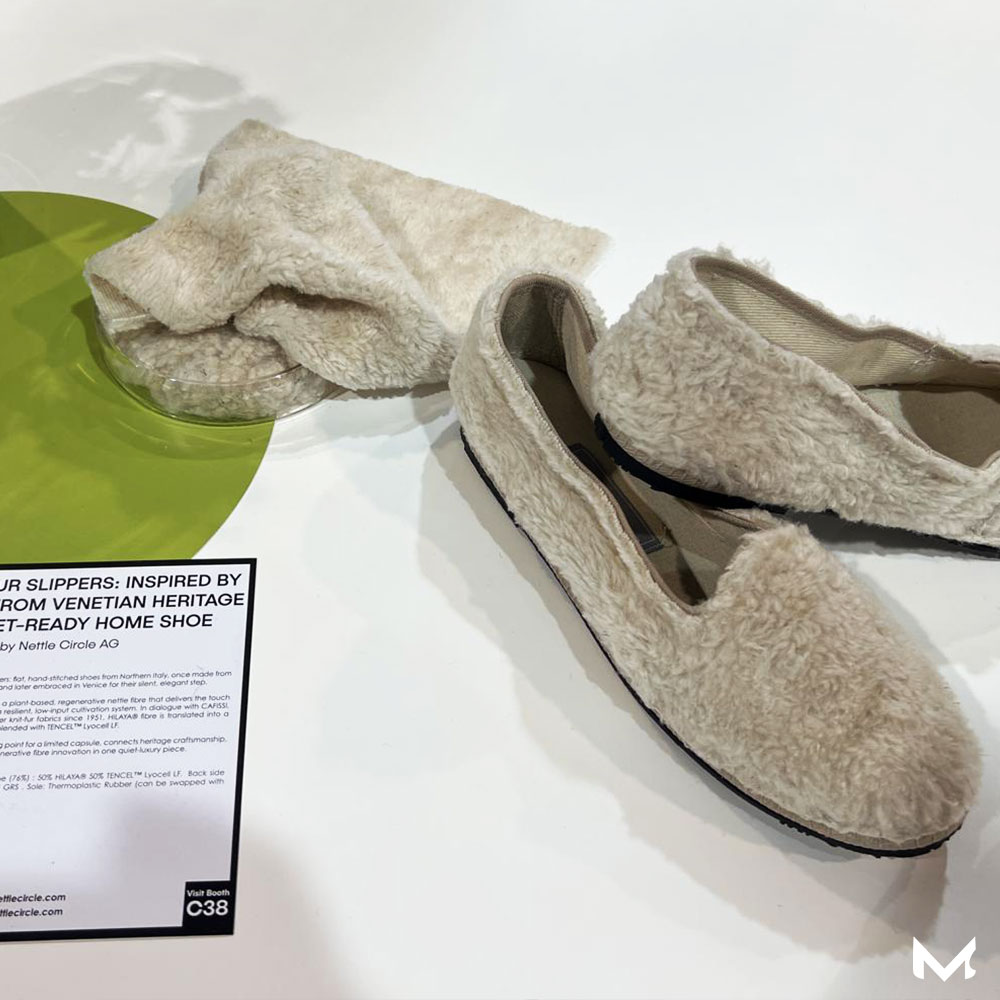
Nettle Fibre products by Nettle Fibre AG, photo by Moject
4. BROD-X: Textile Innovation Beyond Recycling
Perhaps the most exciting discovery during my visit was the Ukrainian start-up BROD-X.
While most recycling technologies aim to separate textiles back into individual fibres, BROD-X approaches the challenge from a completely different perspective.
Considering the enormous amount of mixed textile waste generated worldwide, perfectly sorting fibres before recycling seems increasingly unrealistic.
Instead, BROD-X embraces the mixed material and transforms it directly into entirely new material sheets.
The exact production process naturally remains proprietary. The samples shown at the exhibition appeared durable and well suited for footwear, bags, sports equipment or interior applications. According to the team, thinner material constructions may also become possible.
What impressed me most was not the technology itself but the mindset behind it.
Rather than viewing textile waste as something that must return to its original state, BROD-X treats it as the starting point for an entirely new material category.
Perhaps future recycling will not be about recreating existing fabrics, but about creating completely new ones.
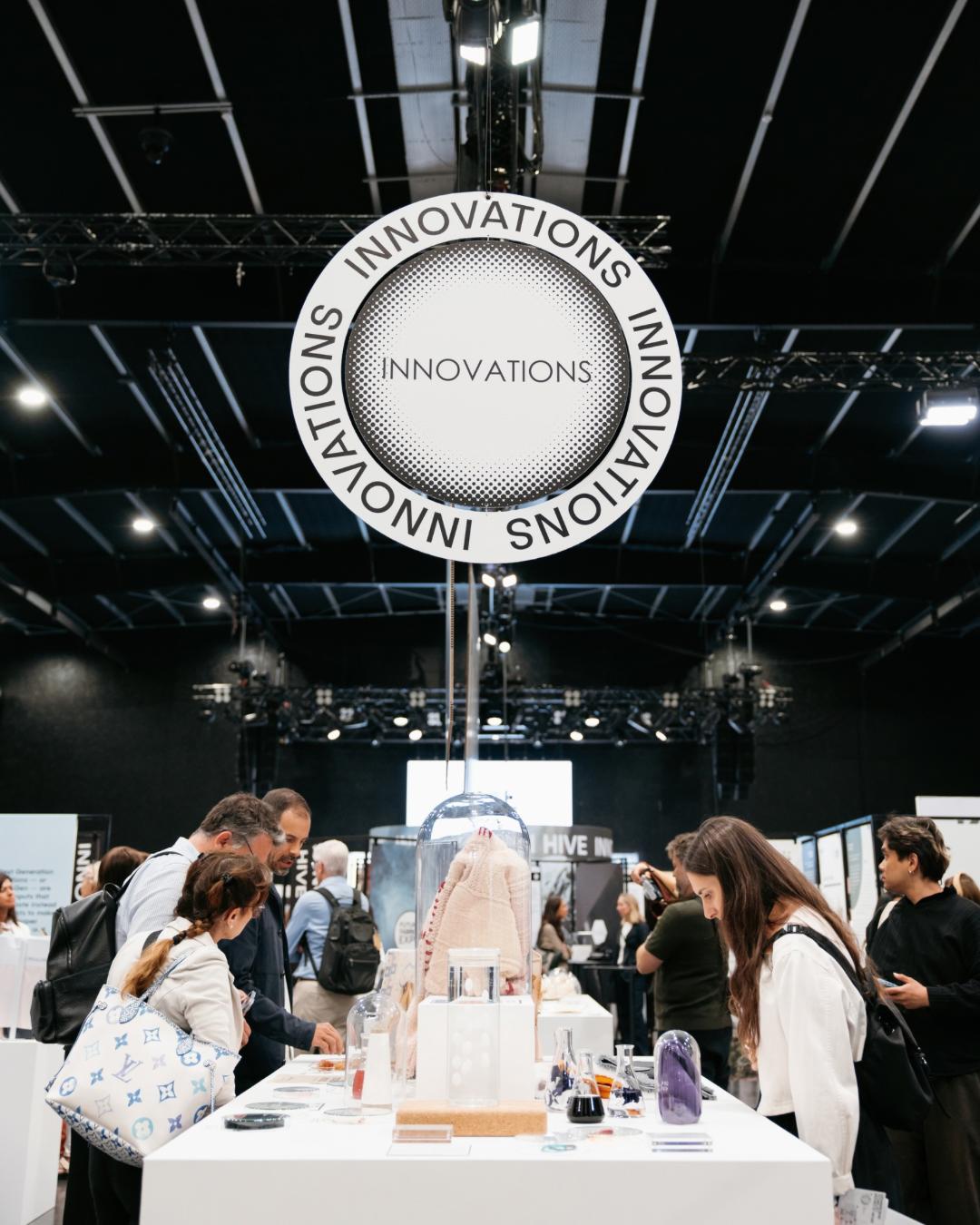
Photo by Fabrics Expo Brussels
5. BIOPLUSH™ — Rethinking Faux Fur
Another material that stayed with me was BIOPLUSH™ by BIOFUR.
Compared with other plant-based alternatives to faux fur that I have encountered, BIOPLUSH felt noticeably softer and more refined.
Made primarily from bio-based polymers, it has been developed as an alternative to PET-based plush and sherpa fabrics while maintaining the comfort and performance expected from these materials.
Rather than introducing an entirely new product category, BIOPLUSH demonstrates how familiar materials can gradually evolve through new material technologies without sacrificing comfort or functionality.
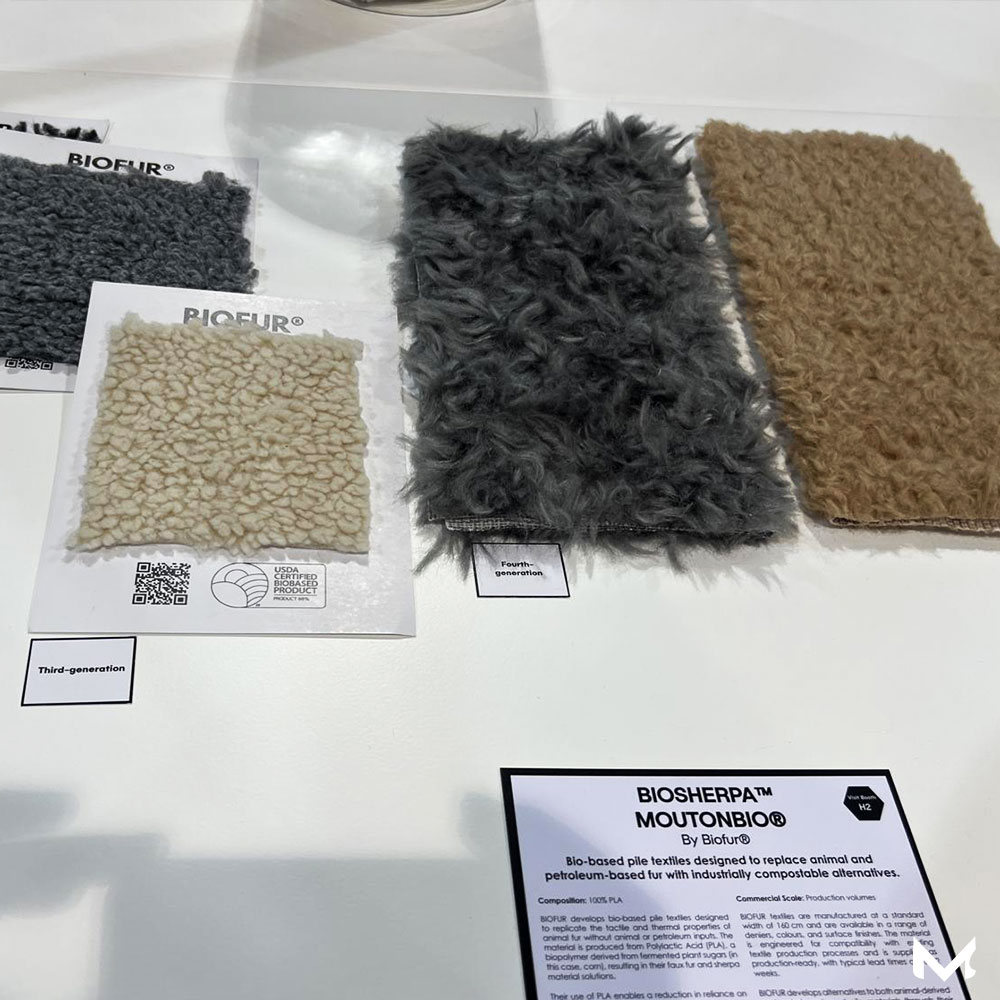
Matreials by BIOFUR, photo by MOJECT
Final Thoughts
The most important takeaway from Future Fabrics Expo was not a single material.
It was a different way of thinking about material development.
Many of today’s most exciting innovations no longer rely on controlling nature or replacing it entirely. Instead, they build upon biological processes, existing resources and the intrinsic qualities of materials themselves.
Designers are increasingly becoming translators between biology, science and product development.
Whether working with nettle fibres, living algae, mycelium or textile waste, the most compelling innovations emerge when materials are not simply engineered, but fundamentally reimagined.
Perhaps this is what the future of textiles really looks like.The future of textiles will not only depend on new fibres but on a completely new understanding of materials.
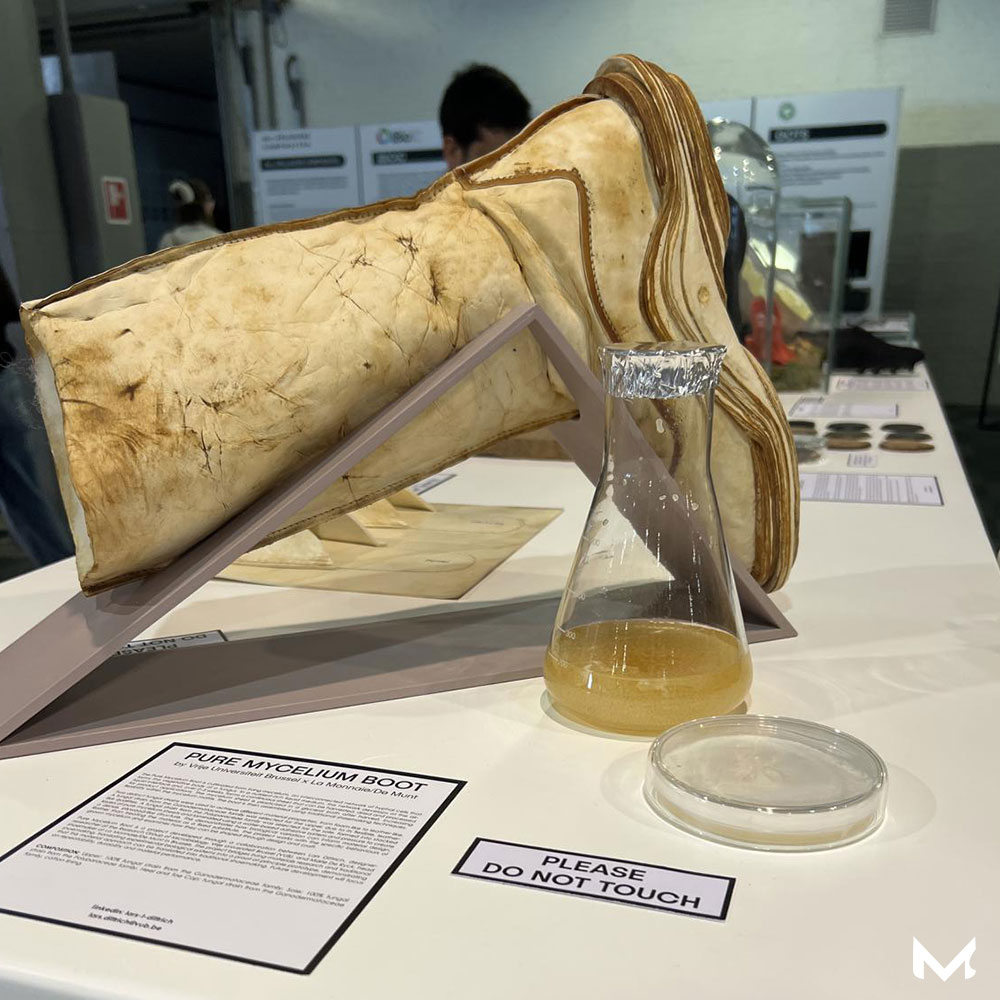
Mycellium boot , photo by Moject
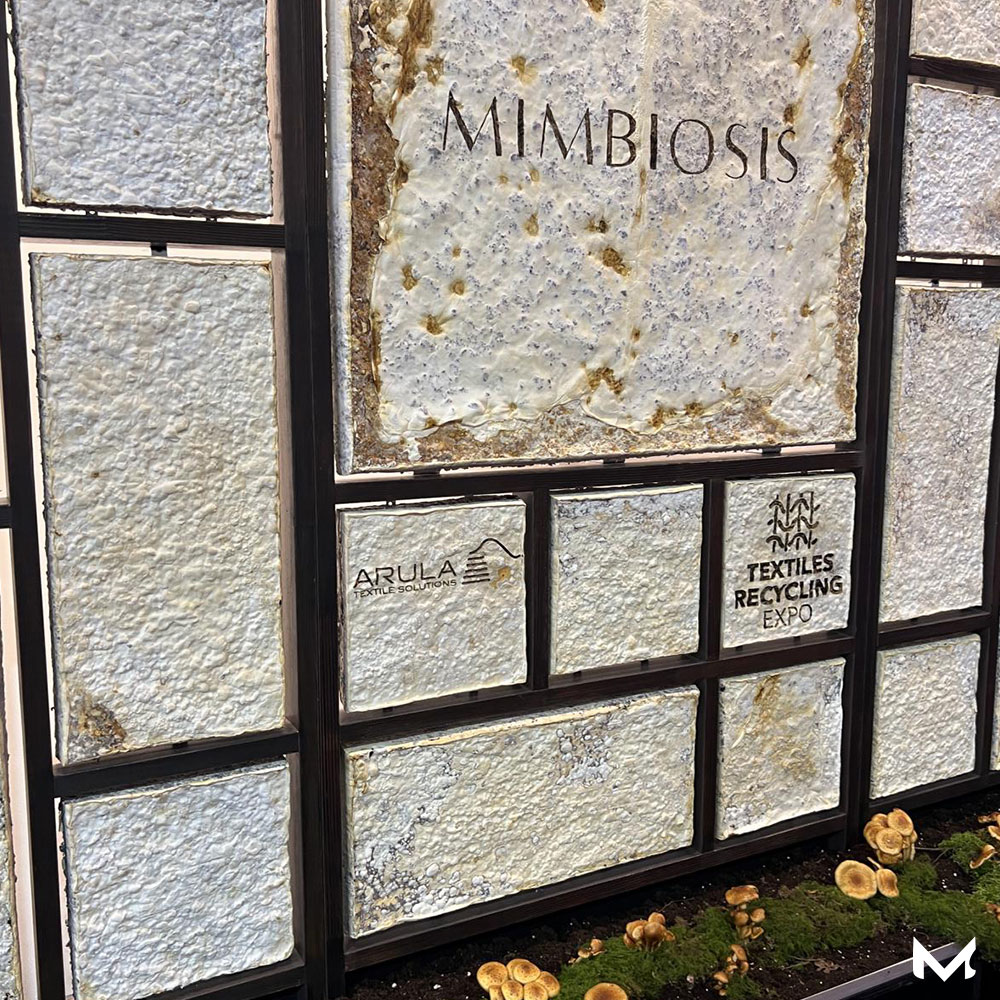
Mycelium-based wall by MIMBIOSIS, photo by MOJECT
Will these materials soon become commercially available?
Some materials, such as BIOPLUSH™, are already available for sampling and production. Others, including projects like the Living Shoe or the pullulan shape-memory fibre, remain research concepts that provide valuable insights into the future direction of material innovation.
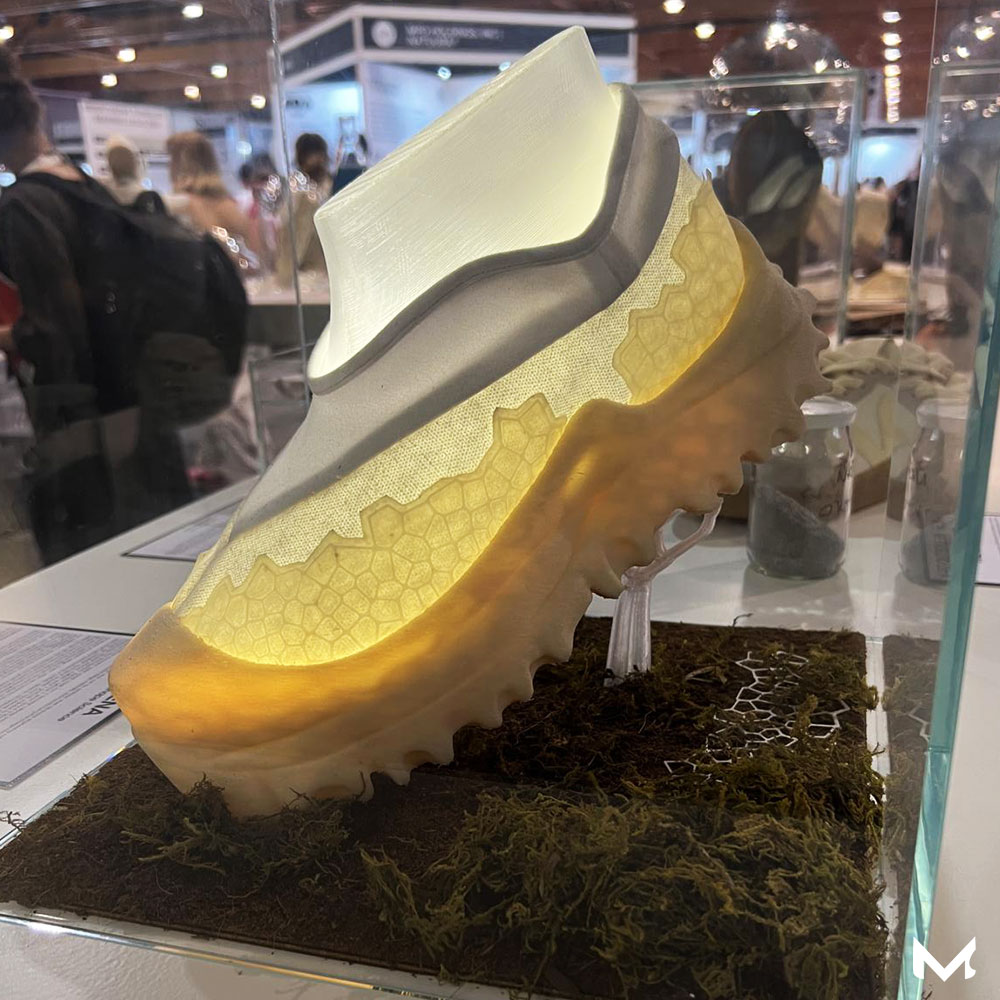
Shoe by Balena Science, photo by Moject
Continue Exploring Material & Colour Trends
Material innovation rarely happens in isolation. Colour, surface, texture and material development increasingly evolve together.
If you are developing collections for Fashion, Sportswear or Outdoor, you may also enjoy the latest MOJECT Trend Book, featuring the key colour directions for upcoming seasons.
→ Discover the MOJECT Activewear Trends S/S 27
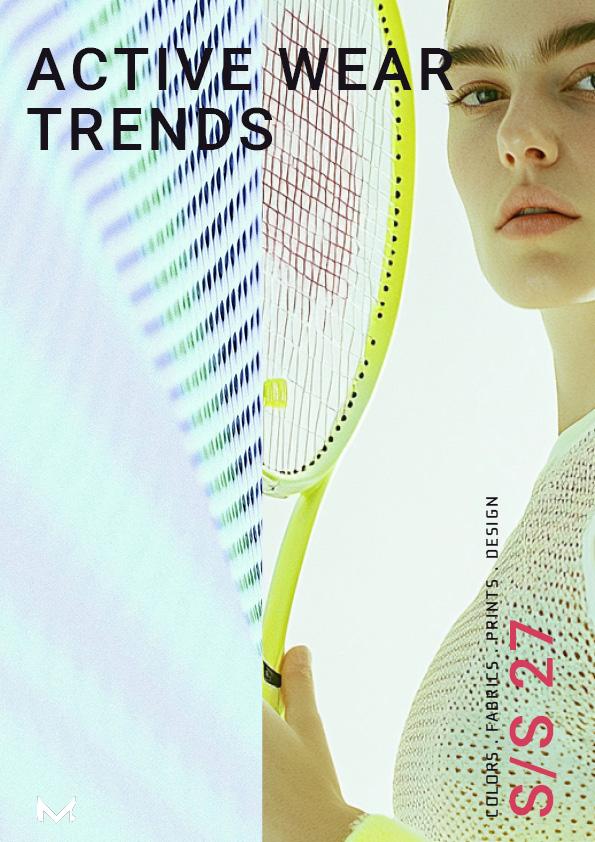
ACTIVE WEAR TRENDS S/S 27
COLORS, PRINTS & DESIGN INSPIRATION
Get this beautiful digital trend forecast for active wear full of incredible color stories, print inspirations and design trends, selected functional fabrics and more.
THIS MIGHT ALSO BE INTERESTING FOR YOU:
7 Highlights of Functional Fabric Trends Winter 2026
7 HIGHLIGHTS OF FUNCTIONAL FABRIC TRENDS WINTER 2026 PERFORMANCE DAYS Munich Oct. 2024 Oct 31,...

The Ultimate Guide to Designer Activewear for Women 2024
DESIGNERS ACTIVEWEAR FOR WOMEN THE ULTIMATE LUXURY BRAND GUIDE 2024 May 06, 2024Image:...

Winter Sports Trends A/W 24/25 ISPO Munich
WINTER SPORTS TRENDS A/W 24/25 seen at ISPO Munich Jan 22, 2024COLORS & DESIGN WINTER A/W...

I'm Christine, future driven activewear designer. I offer design and trend consulting for sports & fashion brands, designers or start up`s.
In these areas I can help you:
Trend consulting & Design for activewear: tailored exactly to your brand and demands
Digital trendbooks: inspirational forecasts for your sports collection
Blog Trend reports & Inspiration: Get my trendletter to receive trend updates and studio news appr.2-3 times a month.